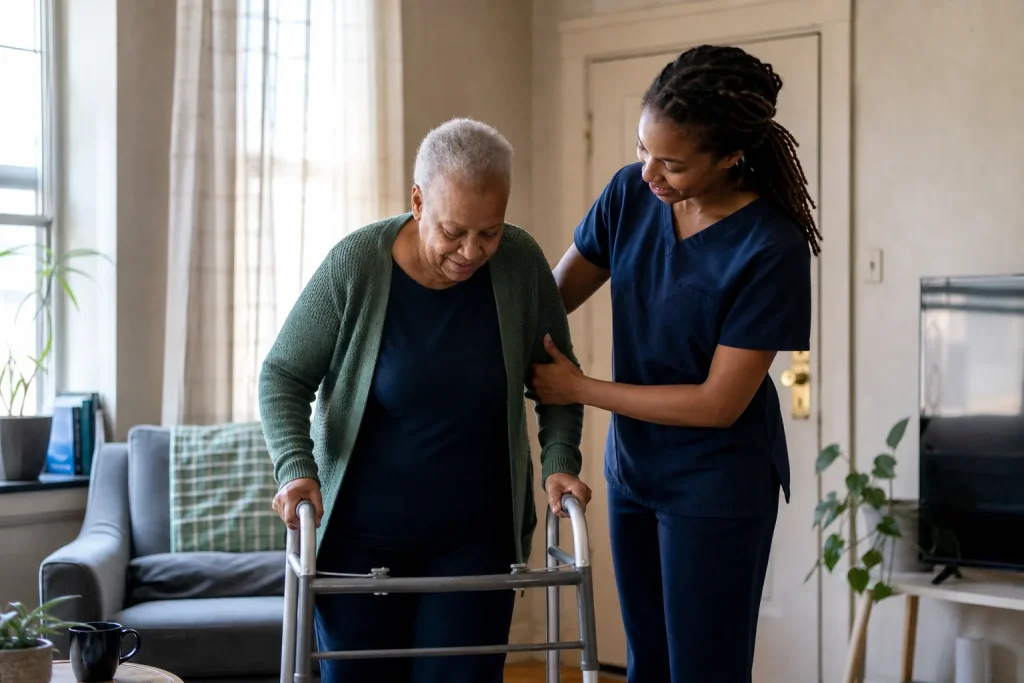
There is a particular quiet that belongs to home care. No overhead paging. No unit clerk calling your name. Just a doorbell, a key safe, a dog that knows your schedule better than the calendar does, and a person who may have been waiting all morning for help to wash, eat, or simply not feel alone.
Building a career in home and community care means choosing that quiet on purpose. It means becoming skilled at work that looks “simple” from the outside and is complex from the inside: reading a room, protecting dignity during intimate care, noticing that today’s gait is different, documenting clearly, and leaving without leaving someone unsafe.
This article maps the work, the skills, and the development paths available to caregivers, personal support workers, home support aides, and community care staff—across contexts such as Canada, the United States, the United Kingdom, and Nigeria—while respecting that titles and regulations differ by place.
Why people choose this field—and why they stay
Some enter home care because hospital shifts do not fit family life. Some prefer continuity with a smaller number of clients. Some are drawn to aging-in-place values promoted in public health conversations by agencies such as WHO, CDC, NHS, and Canadian authorities: supporting people to live meaningfully in their communities for as long as possible.
People stay when they feel competent. Competence in this sector is not theatrical heroism. It is showing up on time in bad weather, washing hands as carefully at the twentieth visit as at the first, and speaking respectfully when a client refuses a shower for the third day running.
A day in the work (and what it demands)
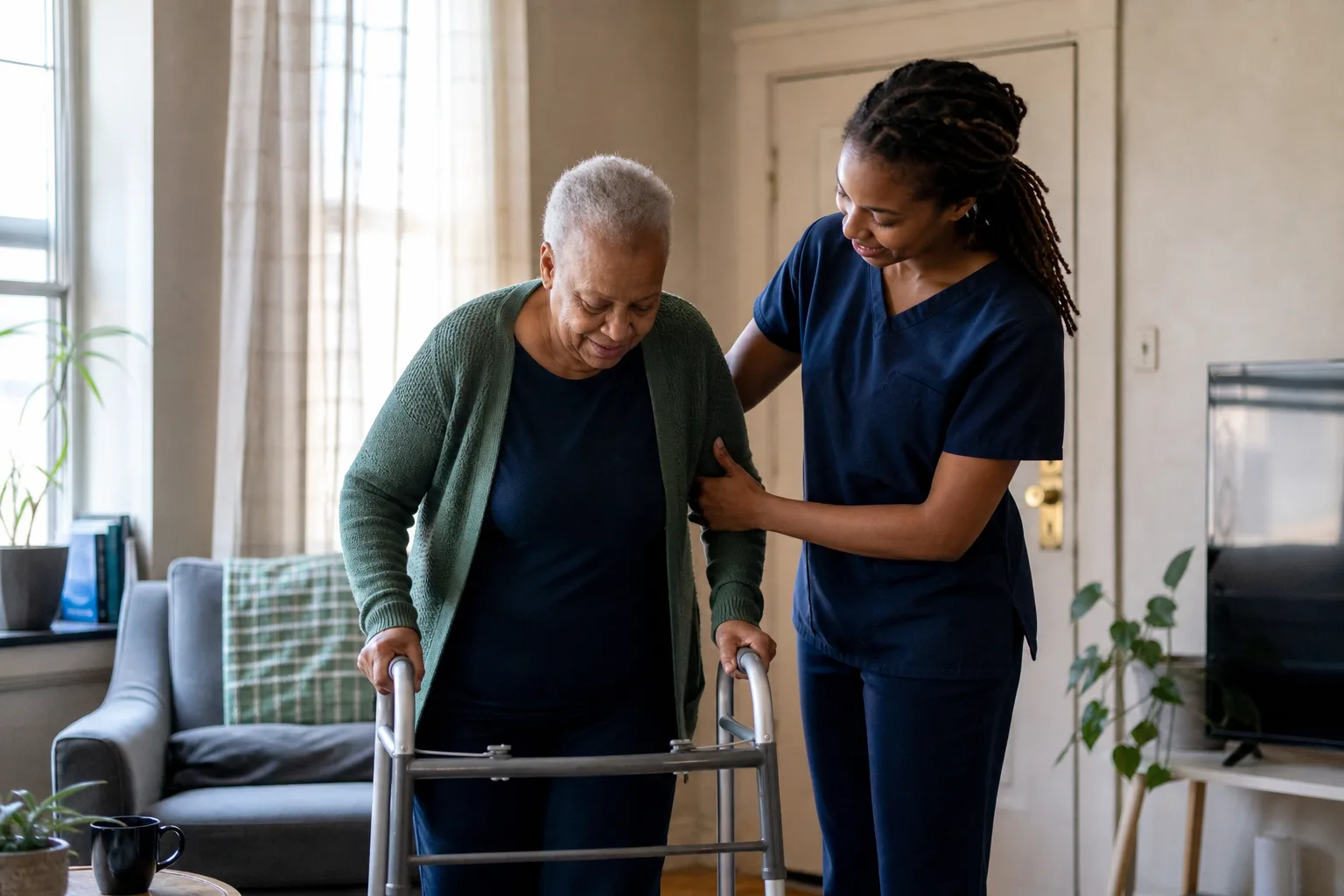
A typical community shift might include travel between clients, personal care, meal preparation support, light household tasks allowed by the care plan, vital sign reporting if trained and authorized, and careful notes. Between visits you manage time, transit, weather, and the emotional residue of other people’s grief.
What the schedule does not always show:
- Negotiating care with family members who disagree with each other
- Adapting when equipment is missing or the home layout has changed
- Recognizing early signs of infection, dehydration, or sudden confusion
- Protecting confidentiality in buildings where neighbours ask curious questions
- Practising cultural humility across language and faith differences
These are trainable skills. Start with Caregiver & Personal Support Foundations, reinforce safety with Infection Prevention & Control, and deepen interpersonal practice through communication skills for PSWs and caregivers.
Skill stack for durable home and community careers
Safety and infection prevention
You move through many environments. Hygiene discipline protects everyone. Public guidance from PHAC, Canada.ca, CDC, NHS, and WHO consistently elevates hand hygiene and appropriate precautions. Read what infection prevention and control means and keep habits sharp.
Dementia-aware and mental health-aware support
Community caseloads often include cognitive change and loneliness. Dementia Care Training, dementia care skills, and Mental Health Support help you respond without escalating distress.
Documentation that travels
The nurse who reads your note tonight was not in the apartment this morning. Write for continuity. Use Healthcare Documentation and why documentation matters as practice anchors.
Medication awareness within scope
Many clients manage complex regimens. Your role may be reminders, observation, or assistance per policy—not independent clinical prescribing. Study Medication Awareness and medication safety for support workers to understand boundaries.
Digital comfort
Scheduling apps, electronic visit verification, telehealth check-ins, and remote monitoring are increasingly common. Build literacy with Digital Health & Telemedicine and context from digital health skills for healthcare workers.

Career pathways inside the sector
Home and community care is not a dead end. Common growth directions include:
- Deeper specialization — complex care support, dementia-focused caseloads, palliative support under clinical direction, or disability support competencies.
- Preceptorship and mentoring — helping new workers learn safe routines.
- Care coordination support — scheduling, follow-up calls, information flow between teams (role titles vary).
- Administration and operations — workforce logistics, quality documentation systems, client intake support. Explore Healthcare Administration.
- Leadership — supervisor or team lead roles where available; see from support work to leadership.
- Related regulated professions — nursing or other titles via separate education and registration (never assumed from short courses).
Organize learning with career pathways, Healthcare Career Readiness, and a visible Skills Passport. Employers evaluating internal growth often look for consistency more than charisma; Figora’s employers resources outline how skills evidence can support workforce conversations.
Challenges unique to community work
Isolation: You may have fewer colleagues nearby when something feels wrong. Know your escalation contacts by heart.
Variable environments: You cannot control every home. You can control preparation, respectful negotiation, and knowing when to pause unsafe tasks.
Emotional labour: Loneliness, family conflict, and end-of-life themes accumulate. Build peer support and use mental health awareness skills without turning yourself into an untrained therapist.
Boundaries: Accepting gifts, sharing personal numbers, or performing tasks outside the care plan can create risk. Follow employer policy even when saying no feels awkward.

How to enter and grow without myths
Entry routes vary: college programs, employer training, on-the-job pathways, and skills courses that strengthen readiness. Compare options carefully using what to look for before you enrol and, for Canadian contexts, caregiver training in Canada. Internationally educated professionals should keep recognition processes separate from skills refreshers—see IEHP training guidance.
A practical growth plan:
- Year one: stabilize safety, punctuality, documentation, and communication.
- Year two: add specialization (dementia, digital tools, or complex care support within scope).
- Year three and beyond: mentor others, explore coordination or administration, or prepare for formal leadership development.
Keep skills current with the habits in keeping healthcare skills current and a living skills development plan. If AI-enabled scheduling or documentation tools appear in your workplace, learn critically via AI in Healthcare and how AI is changing healthcare work.
Working with families as partners—not obstacles
In home care, family members are often co-workers without job descriptions. Some are exhausted experts. Some are frightened newcomers to caregiving. Some disagree with the care plan. Your professionalism shows in how you share observations without taking sides in every conflict.
Practical habits help: greet family by name when appropriate, explain what you will do during the visit, invite questions you can answer within your role, and redirect clinical questions to the nurse or case manager. Document family concerns factually. If safety is compromised—for example, blocked exits or hostility that puts you at risk—follow employer safety protocols without improvising heroics.
Training in communication and dementia-aware practice makes these moments less volatile. Combine Dementia Care Training with Mental Health Support when mood, grief, and cognitive change intersect. Over a career, workers known for calm family partnership are often first in line for complex caseloads and informal leadership—stepping stones described further in support work to leadership.
Self-care is part of the professional skill set
Community care can isolate workers emotionally even when their calendars are full. Build routines that protect sleep, hydration, and peer connection. Use employee assistance programs when available. Practise the same mental health awareness you offer clients—without diagnosing yourself through internet rabbit holes. Supervisors would rather hear early that a caseload is unsustainable than discover errors after burnout.
Professional self-care also includes saying no to tasks outside your training and authorization. That boundary protects clients and protects your licence-to-practise trajectory if you later pursue regulated roles. Record learning that strengthens resilience and judgment, including Mental Health Support, and keep your development visible through a Skills Passport so growth is not only private resolve.
FAQ
Is home care less “skilled” than hospital work?
No. The skill mix differs. Community work often demands greater independence, environmental improvisation, and family navigation. Hospital work may demand different acute-care competencies. Both require professionalism and training matched to the setting.
Do I need a car?
Many roles expect reliable transportation; some urban routes use transit. Check job postings in your area rather than assuming one universal rule.
Can I move from home care into leadership?
Often yes, through experience, demonstrated reliability, and additional skills in communication, documentation quality, and sometimes administration. Leadership appointments follow employer processes and local requirements—not course completion alone.
What should I study first for community care?
Foundational personal support skills, infection prevention, communication, and documentation. Add dementia and medication awareness early if your clients are older adults with complex needs.
Does Figora place me with home care employers?
Figora provides education and career-readiness resources. It does not grant employment authorization or guarantee job placement. Use learning to strengthen your readiness while pursuing roles through legitimate employers and local processes.
Sources & further guidance
- WHO — public resources on aging, community-based care, dementia, and health workforce themes.
- CDC — caregiving and infection-prevention guidance relevant to home and community settings.
- NHS — practical public information on supporting people at home and when to seek clinical help.
- Public Health Agency of Canada / Canada.ca — national guidance useful for Canadian community care contexts.
- Local home care employers and health authorities — definitive sources for role duties, training mandates, and progression opportunities in your region.
Educational article from Figora Insights. This content supports learning and professional reflection. It is not a substitute for clinical advice, employer protocols, or immigration advice. Figora does not grant licensure, immigration status, employment authorization, or visa approval.