It is mid-morning in a quiet apartment. A care worker arrives for a scheduled visit and finds the kettle still hot, the television muted on a weather channel, and the person they support sitting fully dressed—except the shirt is yesterday’s, buttons mismatched, and shoes wait by the wrong door. Nothing here is an emergency. Everything here is information.
That is the daily texture of dementia care. It is rarely only one dramatic moment. It is hundreds of small decisions: how to greet someone, how to invite help with washing, when to wait, when to rephrase, when to stop and try again later. Families and employers often look for “techniques.” Techniques help. What endures is a set of durable skills: seeing the person, protecting safety without stripping autonomy, and communicating in ways the nervous system can still receive.
This article is for personal support workers, home caregivers, community care staff, and family caregivers who want a practical map of dementia care skills—without pretending that an online course replaces clinical assessment, regulated professional judgment, or local care protocols.
Skill 1: See the person before the diagnosis
Person-centred care is not a slogan. In practice, it means building a working portrait of who someone is: preferred name and pronouns, morning versus evening energy, faith or cultural routines, foods that soothe, music that opens a conversation, topics that trigger stress, and the life roles that still matter—parent, teacher, farmer, nurse, storyteller.
Ask families for a short “about me” profile if one does not exist. Keep it practical: how they take tea, which side of the bed they prefer, whether they dislike being touched on the head, whether prayer before meals is non-negotiable. When cognition changes, these anchors become more—not less—important.
What this looks like on a shift
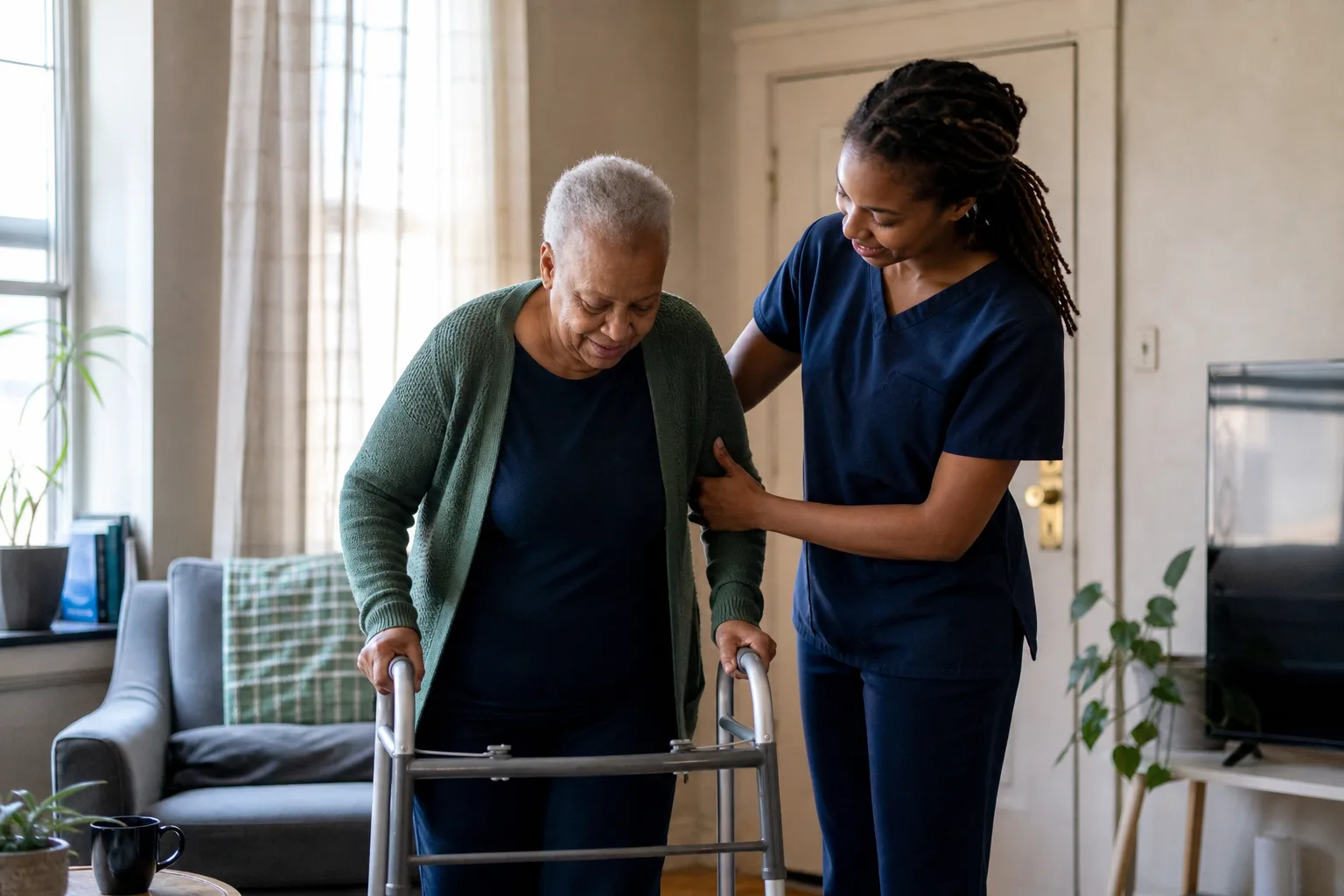
- Offer choices that are real but limited: “Would you like the blue sweater or the grey one?” rather than an open wardrobe.
- Match the pace of the person. Rushing often creates resistance that looks like “behaviour” but is actually overwhelm.
- Use familiar objects as bridges: a favourite mug, a photo album, a radio station from their younger adulthood.
- Protect privacy during personal care even when insight is reduced—announce each step, keep coverage, close doors.
If you are building foundational caregiving habits alongside dementia-specific skills, Figora’s Caregiver & Personal Support Foundations course pairs well with deeper dementia learning on a career pathway.
Skill 2: Communicate for the brain that is present today
Communication in dementia is less about winning an argument and more about lowering cognitive load. Guidance commonly shared by dementia and public health educators includes short sentences, one idea at a time, calm tone, and patience with delayed responses. Eye level matters. Touch—when welcomed and culturally appropriate—can orient someone better than a long explanation.
Practical communication habits
- Approach from the front when possible, so you are not startling someone from behind.
- Say the name, then the invitation: “Ada, I’m here to help with your morning wash.”
- Show, don’t only tell: hold up the toothbrush; mime the motion; offer hand-over-hand support if accepted.
- Watch for non-verbal cues: furrowed brow, pacing, pushing away, humming, or sudden silence.
- Leave and return if refusal escalates—many successful care moments happen on the second gentle try.
Communication skills overlap with broader caregiver practice. Readers who want a deeper focus on interpersonal care can also explore communication skills for PSWs and caregivers.
Skill 3: Read behaviour as communication
When language fades, behaviour often becomes the message. Restlessness may signal pain, hunger, a full bladder, boredom, overstimulation, or fear. Sundowning patterns—increased confusion or agitation later in the day—are widely discussed in clinical and caregiving education; the caregiver’s job is not to label, but to investigate kindly and systematically.
Build a simple observation habit:
- What happened just before the change?
- Is there a physical need (pain, constipation, infection clues, thirst, fatigue)?
- Is the environment too loud, too bright, too empty, or too crowded?
- Did a familiar person leave? Was there a rushed personal-care attempt?
- What soothed this person last time?
Document what you observe in clear, non-judgmental language. “Client paced hallway for 20 minutes after lunch, declined sandwich, accepted water, settled when radio turned to jazz” is more useful than “client was difficult.” Strong documentation habits support continuity—see why that matters in Figora’s guide on healthcare documentation skills and the related Healthcare Documentation course.
Skill 4: Design safer everyday environments
Many dementia-related injuries are environmental: poor lighting, cluttered walkways, confusing bathroom layouts, unlocked hazards, or missing visual cues. You do not need to renovate a home to improve safety. Small adaptations often help:
- Clear main walking paths and remove loose rugs where policy and family agree.
- Improve lighting for evening routines.
- Label drawers with words or pictures if helpful for that person.
- Keep frequently used items visible and in consistent places.
- Reduce competing noise during meals and personal care.
- Support orientation with clocks, calendars, or simple written reminders when useful.
Infection prevention still applies in dementia care—especially when personal care, shared surfaces, and community exposures intersect. Pair dementia skills with foundational hygiene practice through Infection Prevention & Control and Figora’s explainer on what infection prevention and control means in healthcare.

Skill 5: Support daily living without taking over
Activities of daily living—washing, dressing, eating, toileting, transferring—are where dignity and safety meet. The goal is usually maximum independence with necessary support, not completing tasks as fast as possible.
Hand-over-hand and task breakdown
If someone can still start a motion, let them. If initiation is hard, begin the motion together. Break dressing into one garment at a time. Offer adaptive tools only when they reduce frustration rather than add confusion. Celebrate unfinished-but-participated care; participation preserves identity.
Meals and hydration
People living with dementia may forget to eat, eat too quickly, pocket food, or lose interest mid-meal. Sit with them when appropriate. Offer smaller, more frequent opportunities. Watch for swallowing changes and escalate concerns promptly—do not improvise complex feeding techniques outside your training and employer guidance.
Skill 6: Partner with families without taking sides
Families carry grief, guilt, exhaustion, and expertise. Some have been improvising care for years. Others are new to the diagnosis and frightened by every change. Your role is not to mediate every family conflict; it is to communicate clearly, share observations, and reinforce the care plan.
When families ask for medical explanations beyond your role, redirect respectfully: “That’s an important question for the nurse or physician on the care team.” Knowing boundaries is part of professionalism.
Skill 7: Know when to escalate
Caregivers are often the first to notice subtle change. Escalate according to workplace protocol when you see sudden confusion beyond baseline, new weakness, falls, suspected pain that is not controlled, refusal of fluids over time, signs of possible infection, unsafe wandering, or aggression that puts someone at risk. Public health and clinical systems emphasize early recognition of change; your contribution is attentive observation and timely reporting—not diagnosis.
Mental health and emotional support skills also matter for both clients and caregivers. Figora’s Mental Health Support training can complement dementia-focused learning when behaviour, mood, and caregiver strain intersect.
Building these skills over time
No one masters dementia care in a weekend. A realistic development pattern looks like this:
- Learn core person-centred and safety concepts.
- Practice one communication habit for a week (for example, one-idea sentences).
- Review one real shift with a mentor or reflective note: what worked, what escalated, what you would try differently.
- Add environmental and documentation skills.
- Record completed learning in a portfolio such as a Skills Passport so growth is visible to you—and, where appropriate, to employers reviewing your development story.
For a broader view of ongoing professional growth, see how healthcare workers can keep their skills current and how to build a healthcare skills development plan.
FAQ
Do I need a medical degree to provide good dementia care?
No. High-quality dementia support depends heavily on everyday skills: respectful communication, observation, safe daily living support, and knowing when to escalate. Medical assessment and treatment decisions belong to appropriate clinicians. Training helps caregivers practice within their role more confidently.
What should I do when someone living with dementia refuses care?
Pause, simplify the request, check for unmet needs, and try again later when possible. Forcing care can increase distress and risk. Follow your employer’s guidance for safety-critical situations, and document refusals and what you attempted.
How is dementia care different in home settings versus facilities?
The principles—dignity, communication, safety, observation—are shared. Home care often means fewer colleagues on site, more family dynamics, and more environmental improvisation. Facilities may offer more structured routines and team backup. Adapt skills to the setting and local policy.
Can Figora training certify me as a dementia specialist or licensed caregiver?
Figora Healthcare Training Academy provides skills-focused education to support professional development. It does not grant professional licensure, immigration status, regulated titles, or job guarantees. Always confirm local requirements with employers and relevant authorities in your jurisdiction.
Sources & further guidance
- World Health Organization (WHO) — public information on dementia as a global health priority, rights-based care, and caregiver support themes.
- Public Health Agency of Canada / Canada.ca — national guidance and public resources related to dementia awareness and healthy aging contexts.
- Alzheimer Society organizations (country-specific) — practical caregiver education on communication, responsive behaviours, and daily living support.
- NHS — publicly accessible information on dementia symptoms, supporting someone day to day, and when to seek clinical advice.
- CDC — public resources on caregiving and healthy aging relevant to community and family care contexts.
Educational article from Figora Insights. This content supports learning and professional reflection. It is not a substitute for clinical advice, employer protocols, or regulated scope-of-practice rules in your location.