
On a winter afternoon in a mid-sized Canadian city, a new care worker stands in a hallway that smells faintly of lemon cleaner and coffee. A supervisor hands over a tablet, a set of keys for a shared office cupboard, and a schedule that looks simple until you read the notes: “transfer with two-person assist,” “soft diet,” “daughter calls every Tuesday,” “prefers Urdu radio during bathing.” The worker has completed orientation. What they need now is not another slogan about compassion. They need skills that travel from one apartment to the next without losing dignity or safety.
That is the practical meaning of caregiver training in Canada. Demand for home support, personal care, and community-based services sits inside a larger health and social care system where roles, titles, and regulation vary by province and territory. Families want reliable help. Employers want workers who can follow protocols, notice change, and communicate clearly. Learners want a path that is honest: education that strengthens practice without promising outcomes no academy can control.
This article maps the skills that matter, how training fits into career development, and how to use Figora Healthcare Training Academy resources as part of a broader Canadian learning journey—while staying clear about what training can and cannot do.
What “caregiver training” usually means in a Canadian context
In everyday conversation, people use “caregiver training” to cover several different things: college-based personal support programs, employer orientation, continuing education for staff already on the job, family caregiver workshops, and online skills courses that strengthen foundational practice. Those options are not interchangeable. A multi-month college program is not the same as a short skills module. An employer’s mandatory orientation is not the same as elective professional development you choose for yourself.
Public guidance from Canadian and international health authorities consistently emphasizes safe care practices—hand hygiene, recognizing decline, respectful communication, and supporting people to live as independently as possible. National resources on Canada.ca and materials from the Public Health Agency of Canada (PHAC) frame infection prevention, healthy aging, and community care as shared priorities. None of that guidance turns a private course into a licence. It does, however, explain why certain skill themes keep appearing in job postings and workplace policies.
If you are exploring pathways specifically for learners in Canada, start with Figora’s Canada page alongside career pathways so you can see how skills stack rather than shopping for a single “magic” certificate.
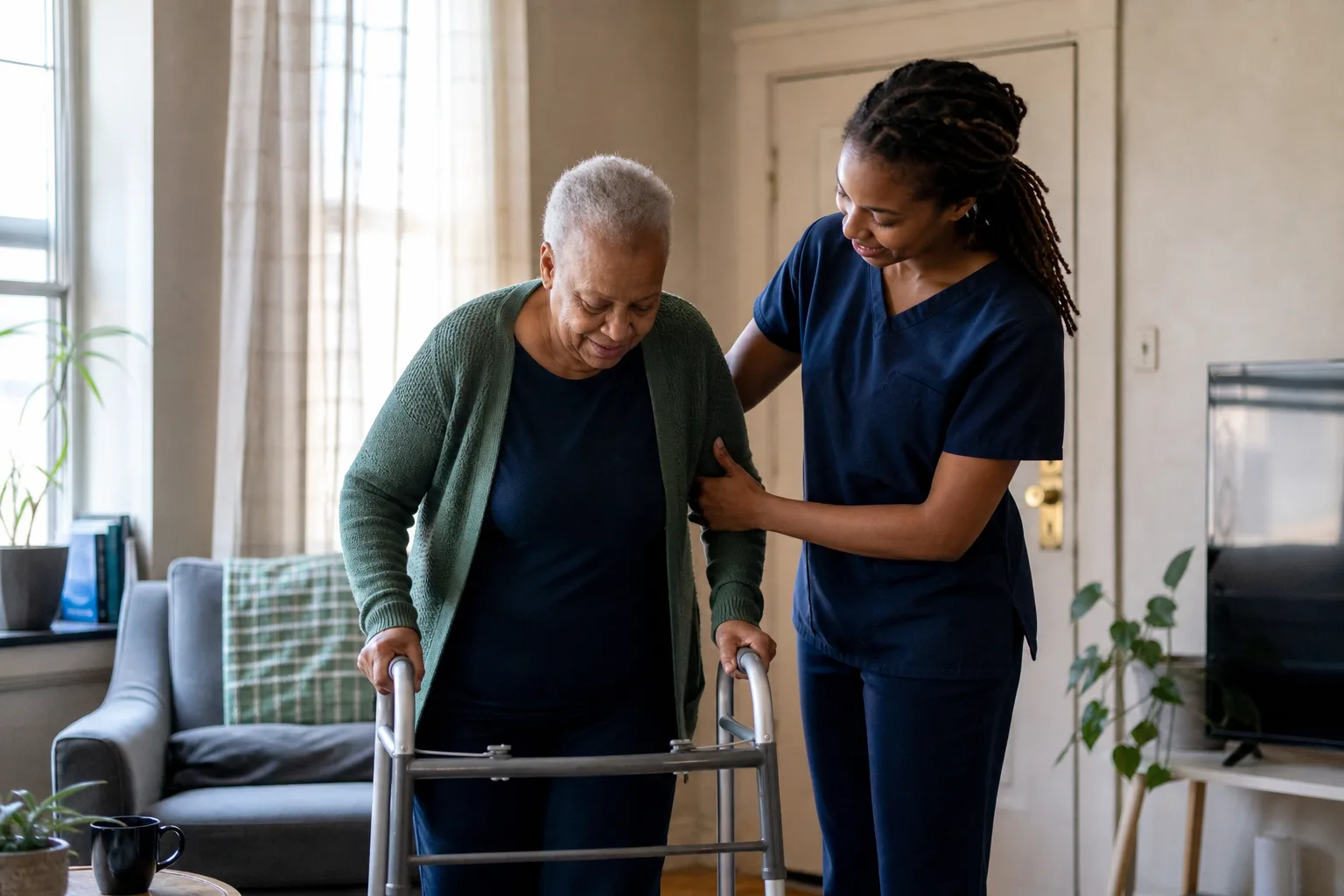
Core skills Canadian employers repeatedly look for
Job titles vary, but the skill clusters rarely do. Whether you support someone in a private apartment, a congregate living setting, or a community program, the work asks for a durable toolkit.
1. Personal care and activities of daily living support
Helping with bathing, dressing, toileting, mobility, meals, and household routines is the visible centre of many caregiver roles. The invisible centre is judgment: how much to assist, when to encourage independence, how to protect privacy, and how to stop when something feels unsafe. Foundational learning such as Caregiver & Personal Support Foundations is designed around these everyday competencies—not as a substitute for supervised practice required by an employer or college program.
2. Infection prevention and control habits
Hand hygiene, appropriate use of personal protective equipment when required, cleaning high-touch surfaces, and recognizing when to escalate possible infection concerns are non-negotiable. Public health messaging from PHAC, Canada.ca, and international bodies such as the World Health Organization (WHO) and the CDC consistently returns to these basics because they protect clients, families, and workers. Figora’s Infection Prevention & Control course supports that foundation; see also what infection prevention and control means in healthcare.
3. Communication that lowers stress
Care work is interpersonal. You negotiate routines with people who may be tired, grieving, living with dementia, managing pain, or adjusting to loss of independence. Clear, calm, culturally respectful communication—and knowing when to involve a nurse, supervisor, or family contact—marks the difference between a shift that goes smoothly and one that escalates. Related reading: communication skills for PSWs and caregivers.
4. Dementia-aware support
Canada’s aging population means many caregivers will support people living with cognitive change. Person-centred approaches, reduced confrontation, and careful observation are widely promoted in dementia education. Explore Dementia Care Training and the companion Insights article on dementia care skills.
5. Documentation and professional reliability
If it is not recorded clearly, the next worker—and the clinical team—may not know what changed. Factual, timely notes protect continuity of care. Figora’s Healthcare Documentation course and guide on why documentation matters speak directly to this expectation.

Training options: how to choose without getting lost
Canadian learners often face a crowded menu: public college programs, private career colleges, employer academies, association workshops, and online skills platforms. A useful decision filter is purpose.
- If you need an employer-recognized credential for a specific job title, ask that employer or a reputable college adviser what they accept in your province. Do not assume an online module alone meets that bar.
- If you already work in care and want to strengthen practice, short, skills-focused courses can fill gaps in infection control, dementia support, medication awareness (within scope), documentation, or digital tools.
- If you are preparing to enter the field, combine foundational skills learning with realistic research on local job titles, language requirements, and any criminal record or immunization checks employers require.
- If you are internationally educated, treat skills courses as bridge learning while you pursue separate credential-recognition or licensing processes where applicable—see our companion guide on healthcare training for internationally educated professionals in Canada.
When comparing online options, use a sceptical checklist: clear learning outcomes, realistic scope (no fake “licence included” promises), assessment that checks understanding, and transparent language about limitations. Figora’s article on what to look for before you enrol in online caregiver training walks through that evaluation in detail.
Career development: from first shifts to broader responsibility
Many caregivers begin with scheduled visits focused on personal care and companionship. Over time, strong performers may take on mentoring new staff, more complex client assignments, scheduling coordination, quality improvement projects, or transitions into administration and team leadership—paths explored further in healthcare career development from support work to leadership and building a career in home and community care.
A realistic Canadian development pattern looks like this:
- Stabilize core practice — become reliable on safety, hygiene, documentation, and communication.
- Add specialization — dementia care, mental health support awareness, medication awareness within scope, or digital health tools used by your employer.
- Seek feedback — ask supervisors where you are strong and where incidents or near-misses suggest growth.
- Document learning — keep certificates, reflection notes, and Skills Passport entries organized.
- Explore adjacent roles carefully — administration, care coordination support, or regulated professions each have their own education and registration rules.
Healthcare Career Readiness can help you organize that journey without confusing readiness with guaranteed placement. Pair it with Mental Health Support when client mood, caregiver strain, and escalation judgment are part of your daily reality.

Provincial reality check: one country, many systems
Canada does not run a single national caregiver licence for every support role. Health human resources planning, home care delivery models, and educational pathways differ across provinces and territories. That is why two people with similar skills may face different hiring checklists in different regions—and why “I took a course online” is never a complete answer to “Am I qualified to work here?”
Practical steps before you invest heavily:
- Read recent job postings in your target city or region and list recurring requirements.
- Contact employers or reputable local educators with specific questions about accepted programs.
- If you are pursuing a regulated profession (for example nursing), follow that regulator’s process separately from skills micro-learning.
- If language is a barrier, prioritize communication practice and workplace English or French as seriously as clinical topics.
Learners comparing international contexts can also review Figora pages for the United States, the United Kingdom, and Nigeria—useful for understanding how titles differ even when foundational care skills look similar.
Making training stick on the job
The risk with any course—online or in person—is finishing with a certificate and unchanged habits. Convert learning into practice with a simple weekly loop:
- Choose one behaviour to improve (for example, announcing each step during personal care).
- Use it on every visit for five shifts.
- Write three lines after a difficult visit: what happened, what you tried, what you would do next time.
- Ask a trusted colleague or supervisor for one piece of feedback.
- Update your skills portfolio so progress is visible.
For a broader planning template, see how to build a healthcare skills development plan and keeping healthcare skills current. Medication-related tasks deserve special caution: stay within your role and employer policy, and use resources such as Medication Awareness and medication safety for support workers only as education within scope—not as authorization to perform restricted acts.
FAQ
Is there one national caregiver licence in Canada?
No single national licence covers every caregiver or personal support role across Canada. Requirements depend on the province or territory, the employer, and whether the role is connected to a regulated profession. Always verify local expectations rather than relying on a generic online claim.
Can Figora training get me a work visa or permanent residence?
No. Figora does not grant immigration status, employment authorization, or visa approval. Immigration processes are handled by government authorities. Training may support your skills story, but it is not an immigration program and should never be marketed or understood as one.
What should I study first if I am new to caregiving in Canada?
Start with foundational personal support skills, infection prevention, communication, and documentation. Add dementia and mental health awareness early if you will support older adults or people with complex needs. Then confirm any local credential employers require in your region.
How do I show employers what I have learned?
Keep certificates, course outlines, and brief reflection notes organized. A Skills Passport-style portfolio helps you present growth clearly. Employers still decide hiring based on their own criteria, references, and any mandated credentials.
Does online training replace supervised practice?
No. Online learning can build knowledge and decision frameworks. Supervised practice, employer orientation, and local policy training remain essential for safe work. Treat courses as preparation and reinforcement—not as a full replacement for workplace learning.
Sources & further guidance
- Canada.ca / Public Health Agency of Canada (PHAC) — public guidance on infection prevention, healthy aging, and community health themes relevant to caregivers and families.
- World Health Organization (WHO) — global perspectives on health workforce support, aging, dementia, and safe care practices.
- CDC — publicly accessible caregiving and infection-prevention education useful for community and home settings.
- NHS — practical public information on supporting people at home and recognizing when to seek clinical advice (useful comparative reading).
- Provincial and territorial health ministries / regulators — authoritative sources for local role titles, regulated professions, and program recognition questions.
Educational article from Figora Insights. This content supports learning and professional reflection. It is not a substitute for clinical advice, employer protocols, regulated scope-of-practice rules, or immigration advice. Figora does not grant licensure, immigration status, employment authorization, or visa approval.