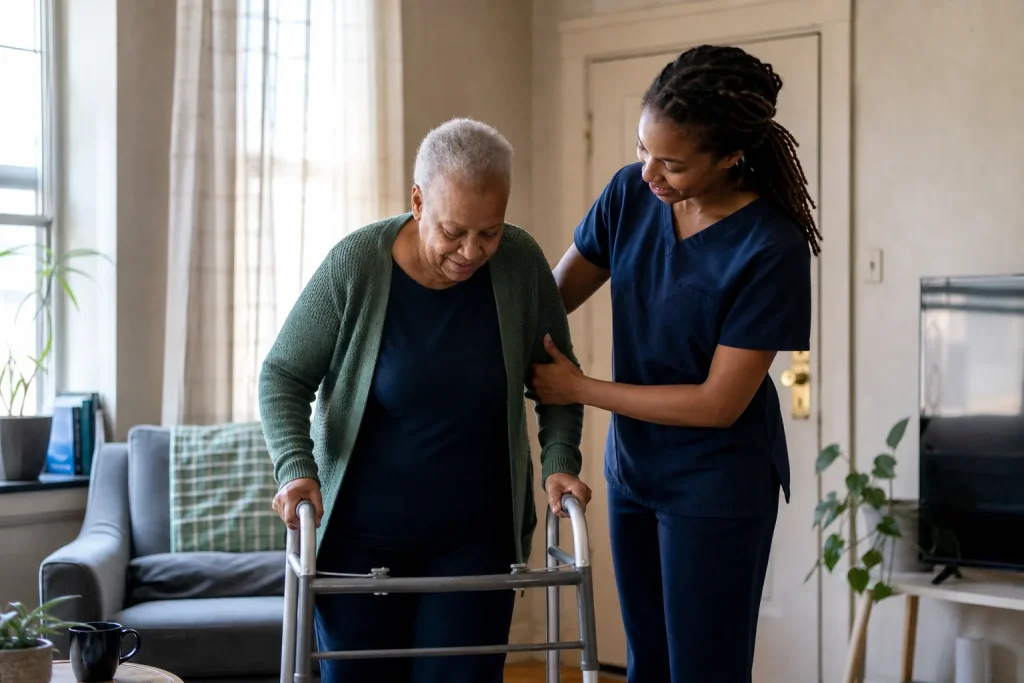
Caregiving looks simple from the outside: help someone wash, eat, move, and feel safe. Inside the work, it is a craft. The best caregivers keep refining practical skills that protect dignity, reduce risk, and make teams trust them. Those skills do not arrive fully formed on day one, and they do not stay sharp without deliberate practice.
This guide focuses on competencies worth continuing to develop whether you are new to care, returning after a break, or strengthening practice in home support, long-term care, or community settings. It is educational guidance—not clinical advice for a specific client—and it does not replace employer policies or regulated training required in your jurisdiction.
What “essential” really means in caregiving
Essential does not mean flashy. It means the habits that keep people safe when you are tired, when tasks stack up, or when a family is upset. Employers often describe strong caregivers as reliable, calm, observant, and clear. Under those words sit trainable skills: how you approach a transfer, how you narrate care, how you notice a change from baseline, and how you hand over information without gaps.
Across Canada, the United States, and Nigeria, care settings differ in regulation, staffing, and equipment. The underlying craft still shares common ground. If you can support personal care with respect, prevent cross-contamination, communicate under pressure, and write what actually happened, you become valuable in almost any care environment.
Skill 1: Person-centred presence
Person-centred care is easy to agree with and harder to practise when routines are rushed. It means treating the person as the expert on their preferences whenever possible, and adapting your approach when cognition, hearing, pain, or culture changes how they receive care.
Habits that show respect in everyday tasks
- Introduce yourself and explain the next step before you touch or move someone.
- Offer real choices within safe limits—timing, clothing, or order of tasks.
- Watch facial expression and body language as carefully as verbal answers.
- Protect privacy during personal care even when you are finishing quickly.
- Learn preferred names, faith practices, and calming routines from the care plan and family.
When someone lives with dementia or distress, person-centred practice becomes even more important. Quizzing for facts they cannot retrieve often increases agitation. Validating emotion and simplifying the environment usually works better. Structured learning such as Dementia Care Training and Mental Health Support can help you rehearse these responses before a difficult shift.
Skill 2: Safe mobility and body mechanics
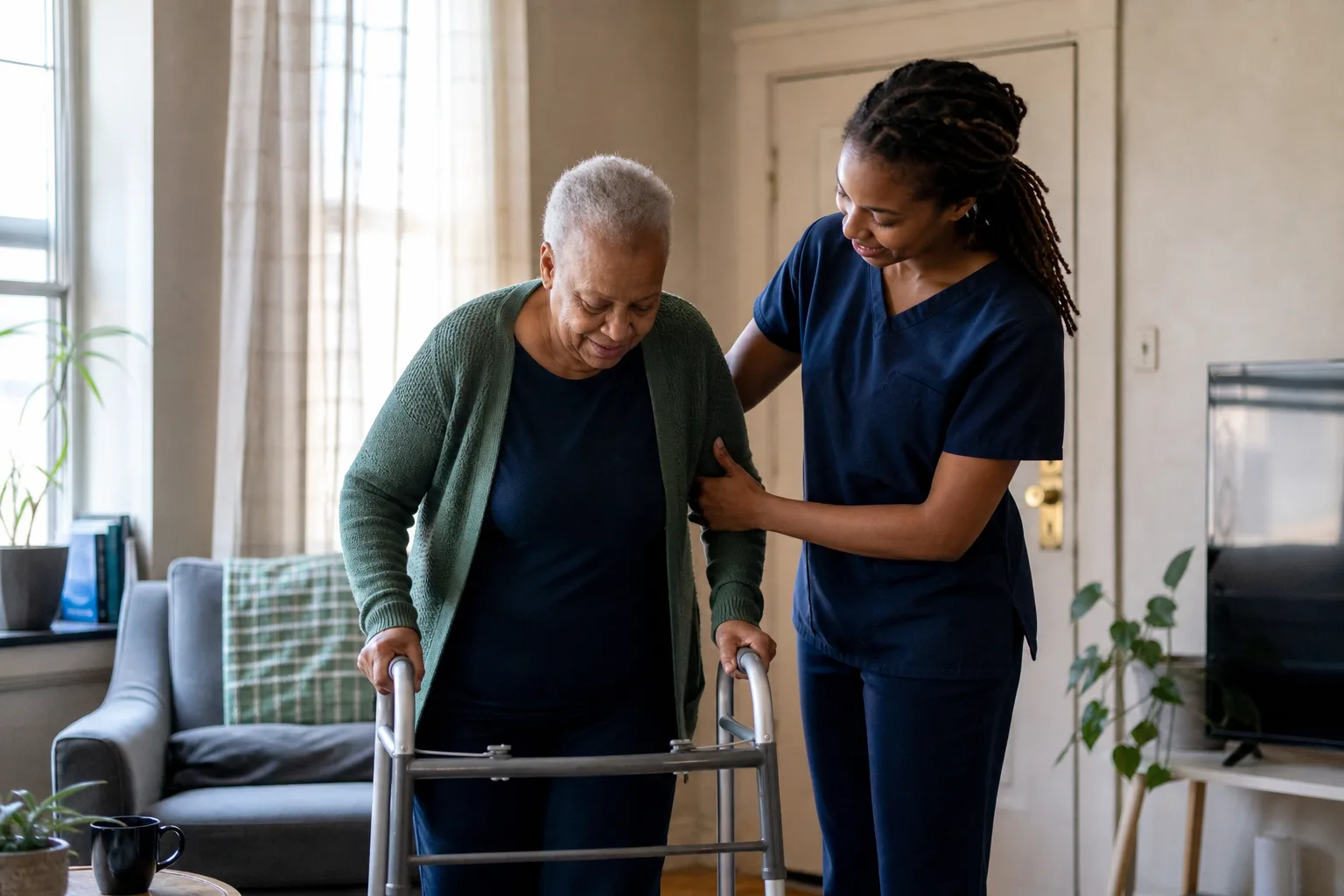
Transfers, repositioning, and walking support are where many injuries happen—to clients and to workers. Safe mobility is not about strength; it is about planning, equipment use, and knowing when to stop and get help.
- Assess first: Can the person follow directions? Are they dizzy, in pain, or newly weaker?
- Prepare the path: Clear clutter, lock brakes, place footwear, and position chairs intentionally.
- Use approved equipment: Follow the care plan for gait belts, transfer boards, or mechanical lifts.
- Move with the person, not against them: Count together, wait for readiness, avoid sudden pulls.
- Report change: A new limp, near-fall, or refusal of transfers is information the team needs.
If your role includes mobility support, ask for observed practice with a mentor. Online learning can prepare your thinking; hands-on competency checks belong with your employer or regulated program.

Skill 3: Infection-aware daily routines
Caregivers touch surfaces, laundry, shared bathrooms, wound dressings, and meal setups. Infection prevention is not a separate department’s job; it is woven into hand hygiene, glove use, cleaning sequences, and knowing when to escalate. Public guidance from organizations such as the WHO, CDC, and the Public Health Agency of Canada consistently emphasizes hand hygiene, standard precautions, and situational use of additional precautions.
Practical caregiver habits include cleaning high-touch points in the care space, separating clean and dirty linen pathways, and never improvising with PPE when your employer has a defined process. For a deeper foundation, see our explainer on infection prevention and control and the course Infection Prevention and Control.
Skill 4: Observation and early escalation
Great caregivers notice small changes early: less appetite, new confusion, cooler extremities, unusual breathing effort, a bruise that was not there yesterday, or a sudden change in toileting pattern. Observation is a skill because it requires a mental baseline for each person and the discipline to report without over-interpreting.
Use plain language. Describe what you saw, when you saw it, and what you did. Avoid diagnosing. “Client declined breakfast and appears more drowsy than usual at 08:15; vital signs taken per protocol and nurse notified” is more useful than “Client seems sick.” Pair observation with documentation skills covered in Healthcare Documentation.
Skill 5: Communication under real conditions
Communication in care includes clients, families, nurses, therapists, schedulers, and sometimes interpreters. Tone matters as much as content. Families may be grieving, exhausted, or receiving conflicting advice. Colleagues may be mid-emergency when you need a quick answer.
Communication practices worth rehearsing
- Closed-loop handovers: confirm the listener heard the critical points.
- Teach-back with clients when explaining a simple task or reminder.
- Neutral language in conflict: stick to observations and care-plan facts.
- Cultural humility: ask preferences; do not assume.
- Boundaries: kindness without making promises outside your scope.
If you support people with cognitive change, communication training is not optional soft skill—it is safety infrastructure. Revisit dementia and mental health modules periodically rather than treating them as one-time checkboxes.

Skill 6: Medication awareness without overstepping
Many caregivers assist with medication reminders, observe side effects, or support self-administration under policy. Medication awareness means knowing what you are allowed to do, what you must never improvise, and how to respond when something looks wrong—wrong person, wrong time, spilled dose, or unexpected drowsiness.
Follow the rights of medication assistance as framed by your employer’s procedure, refuse unsafe shortcuts, and document refusals or incidents promptly. Figora’s Medication Awareness course is designed for support roles that need safety habits—not for prescribing authority. Scope of practice varies by country and role; always follow local regulation and employer rules.
Skill 7: Documentation that protects everyone
If it is not recorded clearly, the next worker may not know it happened. Documentation is how care becomes continuous. Write factually, timely, and specifically. Avoid blame, gossip, and vague phrases like “all care given” when the situation was unusual.
Privacy is part of the skill: share information with authorized team members through approved channels, not group chats or hallway commentary. For a fuller treatment, read Why Healthcare Documentation Skills Matter.
Skill 8: Emotional stamina and professional boundaries
Caregivers absorb grief, family conflict, and moral pressure. Burnout is not a personal failure; it is an occupational hazard. Skills that help include brief grounding between visits, peer debrief when policy allows, saying no to tasks outside your training, and maintaining respectful boundaries with families who want more than your role can provide.
Mental health support skills also help you recognize distress in clients without trying to become their therapist. Use referral pathways your organization defines. Explore Mental Health Support for structured foundations.
How to keep developing without overwhelming yourself
Trying to master everything at once usually produces shallow learning. A better pattern is:
- Pick one skill gap that shows up weekly in your work.
- Complete a short, practical course or mentored practice block.
- Apply one new habit for two to four weeks.
- Ask a trusted colleague for feedback.
- Record the learning and move to the next gap.
Caregiver & Personal Support Foundations is a strong starting point if you want a broad base. Pair it with specialty depth—dementia, infection prevention, documentation—as your role demands. Map options on Career Pathways and keep a living plan using guidance in How to Build a Healthcare Skills Development Plan.
Putting the skills together on a real day
Imagine a morning that includes a hesitant transfer, a family question about yesterday’s appetite, a medication reminder, and a client who seems quieter than usual. None of these moments is dramatic alone. Together they require the full stack: mobility judgment, respectful communication, medication awareness, observation, and documentation. Caregivers who practise skills in isolation often struggle when the day asks for several at once.
Use shift reflection as a learning tool. After a difficult visit, ask yourself which skill helped and which one you want to rehearse. Share non-confidential lessons with a mentor when appropriate. Over months, this reflective habit turns experience into competence faster than collecting certificates without application.
Browse additional practical reading in Figora Resources, then choose one course that matches this week’s friction point rather than next year’s hypothetical role.
What Figora does—and does not—claim
Figora provides healthcare skills education and career-development resources for learners and employers. Completing Figora courses can support competence and confidence. Figora does not grant professional licensure, immigration status, visas, continuing education unit credit unless separately stated by an authorized body, job placement guarantees, or regulatory recognition. Always verify requirements with employers and official regulators in your region.
FAQ
Which caregiver skill should I improve first?
Choose the skill that most often creates risk or friction in your current role—commonly hand hygiene and PPE habits, mobility safety, or clear handovers. Immediate workplace relevance beats a distant credential when you are building momentum.
Do online courses replace employer training?
No. Online courses build knowledge and structured practice. Employers still set policies, observed competencies, and site-specific procedures you must follow.
Are these skills useful outside Canada?
Yes. Core caregiving craft travels well, but laws, titles, and scopes differ. Review local requirements if you work in the USA, Nigeria, or elsewhere, and treat Figora learning as skill development—not automatic credential transfer.
How do I show progress to employers?
Keep certificates of completion, reflection notes, and a skills inventory. Where available, record learning in your Skills Passport and discuss demonstrated habits during supervision—not only course titles.
Sources
- World Health Organization (WHO) — hand hygiene and infection prevention principles for health workers.
- U.S. Centers for Disease Control and Prevention (CDC) — infection control and healthcare worker safety guidance.
- Public Health Agency of Canada — public health and infection prevention resources for Canadian contexts.
- NHS — public-facing guidance on care quality themes relevant to support roles.