Every week, Nigerian families lose loved ones to stroke, or watch them live with disability that might have been reduced with faster help. Too often, precious hours are lost because people wait to see if symptoms improve, give the person water or herbs, rub their limbs, or take them first to a chemist or place of prayer. This guide explains how to recognise a stroke and what to do immediately.
BE FAST: how to spot a stroke
- B – Balance: sudden loss of balance, dizziness or difficulty walking.
- E – Eyes: sudden loss of vision in one or both eyes, or double vision.
- F – Face: one side of the face droops. Ask the person to smile.
- A – Arms: weakness or numbness in one arm or leg. Ask them to raise both arms; one may drift down.
- S – Speech: slurred speech, confused words, or difficulty understanding.
- T – Time: time to get emergency help. Note the time symptoms started.
Other warning signs include a sudden severe headache unlike any before, sudden confusion, or difficulty swallowing.
What to do immediately
- Call for emergency help or arrange transport to the nearest hospital that can do a CT scan. In Lagos, the state emergency number 112 or 767 can help; in other states, know your local emergency numbers in advance.
- Keep the person safe: lay them on their side if they are drowsy or vomiting, and keep the airway clear.
- Do not give anything by mouth: no water, food, medicines, herbs or “anointing oil” in the mouth. Swallowing may be affected, and they could choke or inhale fluid.
- Do not give aspirin unless a doctor tells you to. If the stroke is a bleed, aspirin can make it worse.
- Bring information: the person’s medicines, medical history and the time symptoms started.
- Stay with them and reassure them, even if they cannot speak.
Stroke risk factors
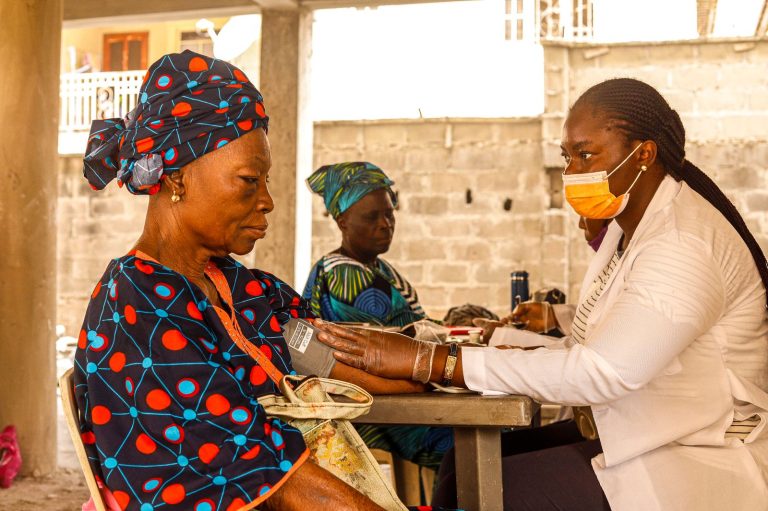
- High blood pressure (the most important). See high blood pressure in Nigeria.
- Diabetes.
- Smoking and heavy alcohol use.
- High cholesterol and being overweight.
- Heart conditions such as atrial fibrillation.
- Sickle cell disease, which can cause stroke in children and young adults.
- Older age and family history.
- Physical inactivity and a diet high in salt, such as heavy use of seasoning cubes.
Caring for someone after a stroke
Recovery can take months, and many people need help at home. Caregivers play a central role:
- Safe swallowing: follow advice from the hospital team on food textures and positioning. Watch for coughing or choking during meals.
- Mobility and falls: support walking safely, use aids as advised, and keep floors clear.
- Positioning and skin care: change position regularly to prevent pressure sores in people who cannot move much.
- Communication: be patient, use simple questions, pictures and gestures.
- Medicines: blood pressure and other medicines must be taken exactly as prescribed.
- Mood: depression after stroke is common. Encourage, include, and seek help if needed.
- Exercises: follow physiotherapy routines regularly.
FAQ
What does BE FAST stand for?
Balance, Eyes, Face, Arms, Speech and Time. It is a simple way to recognise common stroke signs and remember to get emergency help quickly.
Should I give water or aspirin to someone having a stroke?
No. Do not give anything by mouth because swallowing may be affected. Do not give aspirin unless a doctor advises it, because some strokes are caused by bleeding.
What if the stroke symptoms go away?
It may be a transient ischaemic attack (TIA), a warning that a full stroke may follow. Seek urgent medical assessment even if symptoms have resolved.
What is the biggest risk factor for stroke?
High blood pressure is the most important modifiable risk factor. Regular checks, healthy diet with less salt, activity and taking prescribed medicines reduce risk.
Sources & further guidance
- World Health Organization: stroke and cardiovascular disease information.
- World Stroke Organization: stroke signs and prevention.
- NHS: stroke symptoms and treatment.
- Nigeria Federal Ministry of Health: non-communicable disease programmes.
Educational article from Figora Insights. This is not medical advice. In an emergency, seek help immediately.
Watch